Tuesday, July 2, 2019

Summer Camp 2019 - Explore, Create & Discover!

Spend the summer of 2019 @ The Institute For American Indian Studies!  Our camp programs offer immersion into the natural world and culture of Connecticut's Eastern Woodland Native American people through the exploration of our replicated 16th century Algonkian Village, our forests, three sisters garden, and museum.  Experienced and professional educators provide young and curious minds with exciting programs that engage and educate.


The programming for the Institute for American Indian Studies Summer Camps have been created to inspire and engage children from ages  5-12 and 13 to 16 in explorations of the natural world and history of Connecticut's first inhabitants on Monday - Friday from 9 a.m. to 3 p.m. with extended camp options available with pre-registration.  Young people from ages 13 - 16 can apply to a counselor in training program.  Interactive activities include traditional stories, crafts, team building activities, and games that bring history to life in age-appropriate contexts. Kids will explore hands-on exhibits in our museum as well as in our outdoor replicated 16th century outdoor Algonkian Village and Three Sisters Garden located on 15 unspoiled acres,  go on hikes to Steep Rock and the Shepaug River, and visit our traditional herb and flower garden.  The week specific programming includes a group project that allows campers to practice the skills that they have learned to create something to take home and share with their friends and family or to leave at the museum for future visitors to enjoy.  Kids will make friends, enjoy the summer and learn about Native American culture.


Weekly camps with different themes run from July 8 -August 16, 2019.  Kids that love archeology and wonder what tools archeologists use to discover the past will enjoy Digging Detectives: Archeology Week, July 8-12.  If your children are interested in food, Eating with the Seasons: Foraging in the Forest from July 15-19 teaches children how Native Americans were able to thrive in the natural world using their knowledge of the forest and rivers.  Crafty Creations week on July 22-26 is sure to inspire the budding artist in your child. In this program, kids will learn about crafts, music, arts, and storytelling from a variety of Native American cultures, past and present. 


To experience the beautiful natural environment at The Institute as well as to sharpen outdoor survival skills, Get Out! Woodland Survival, July 29 - August 2 will teach children outdoor living skills from knot tying and navigation to the safe use of fire in an outdoor setting and much more.  On August 5-9, Tech It Out! Not So Primitive Technology will uncover the mysteries of the past and show kids how Native Americans figured out creative ways to thrive in their environment.  The creation of tools, the construction of shelter and how to find food in the natural world that surrounds them will be on this week's agenda.  The final program of the summer, Nature Nuts: Forest and River Ecology from August 12-16 teaches the valuable lesson that all living things are connected.  This important life lesson will be taught through games, stories, crafts and more.

For complete registration information, visit http://www.iaismuseum.org. Pricing is $228 for members of The Institute for American Indian Studies and $285 for non-members; families with two or more children registered to get a family discount. Registration forms and non-refundable deposit of $100 is due by May 17, 2019.  The summer camp director is Gabriel Benjamin and he can be reached at gbenjamin@iaismuseum.org.

Monday, June 24, 2019

Medicinal Monday - Common Barberry

This deciduous shrub is native to New England where it grows wild.  It is part of the Berberidaccae family that includes 175 different species.  Today, many of these species are used in ornamental gardens or as hedges.   Like many other cultures around the world, the Berberis vulgaris is used by Native Americans to treat many maladies from ulcers and sores to heartburn.


About Berberis vulgaris
This thorny shrub with small oval leaves grows in clusters and the shrub itself can grow up to 13 feet high.  The yellow flowers grow in small clusters that bloom from May to June and are said to have an unpleasant odor.  The fruit is an oblong red berry that ripens in late summer or early autumn. When the branches of this plant come in contact with the earth, new plants can be produced.  Because this shrub is tolerant of shade, in woodland areas, it is considered to be invasive. The berries, which are rich in vitamin C can be eaten but are very sour.  Often the berries are dried and eaten like raisins.


Medicinal & Practical Uses of Berberis Vulgaris

Medicinal plants have been known among different nations for thousands of years and have been used throughout the centuries. Native Americans knew by experience the use of this shrub for many illnesses.  The Micmac use a mixture of the bark and root of this plant as an oral aid for sore gums.  The Mohegans made a decoction of pounded berries to treat colds and the juice of the berries is mixed with water to treat fever. The Penobscot pounded the roots and bark and used it to treat gums and a sore throat.  The Shinnecock made a decoction of leaves which was taken three times a day to treat jaundice.  Many native communities make a root tea from this shrub and drank it as a blood tonic and to treat kidney ailments.  The roots of this plant are used in an interesting and creative way. Native Americans found that the yellow roots of this plant are an important source of dye for baskets, buckskins, and fabric.


Did You Know

In Europe, the berries have been a traditional ingredient in making jam.

The flowers were used as a dye and the thorny shrub provided fencing in central and southern Europe.

In New Zealand, this plant has been cultivated for hedges.

The medicinal plants from the genus Berberis are important to traditional medicine in Iran.

In Russian folk medicine, this plant was used to treat inflammation and to stop bleeding in general.


About The Institute for American Indian Studies (IAIS)

Located on 15 woodland acres the IAIS preserves and educates through archeology, research, exhibitions, and programs.  We have an outdoor replicated 16th c. Algonkian Village and Wigwam Escape and a Museum with temporary and permanent displays of authentic artifacts from prehistory to the present that allows visitors to foster a new understanding of the world and the history and culture of Native Americans. The Institute for American Indian Studies is located on 38 Curtis Road in Washington Connecticut.


Thursday, June 20, 2019

Wigwam Escape Room Tips

If you are a newbie or a seasoned escape room player there are a few helpful tips to keep in mind when trying to solve puzzles and beat the clock!  In addition to listening attentively to your host or hostess of the room, we have compiled eight tips from players that have experienced Wigwam Escape to help you find your way to a cure for the village and escape the room.  To book the room visit https://wigwamescape.org


Play the game with five friends, co-workers or family members.
Teams that know each other work better together because there is a common thread of communication and knowledge of how your teammates think.  Escape rooms require teamwork, your best bet is to rent the room out for your group.

Listen to your teammates.
If you can't solve a puzzle on your own, don't be afraid to ask your team for help.  If your teammate has an idea, try it out with them, it just might work.

Communicate with your teammates.
If a member of your team finds an important clue, make sure it is communicated to the rest of the team.  Escape rooms can be chaotic and the clock is always ticking so communicate.

Divide and conquer to search.
It is important that every member of your team contributes to the escape and helps to solve the puzzles. Communication and organization of different tasks make everyone feel included in the game and ensures that some puzzles won't be missed or forgotten until the last minute.

Be organized!
It is helpful if you organize the solved puzzles neatly in the room where they are easily accessible. Make sure that you inspect the room thoroughly so you don't miss any important clues.

Ask for a hint.
If your team is really stuck on something, don't be afraid to ask for a hint.  It is no fun if you are frustrated because you are overly stuck!  Our hosts at Wigwam Escape are trained to push you in the right direction.

Don't use excessive force.
Breaking puzzles is bad for the escape room and for the players. Player safety and the sequence of the game depend on functionality so avoid climbing on walls, trees and other items in the room. Game hosts will run down a list of things that will keep you out of trouble!

Don't be afraid to lose.
The game is most fun when you take your time and enjoy solving the puzzles. Wigwam Escape is designed to be fun, educational and challenging.  Have fun with your friends playing the game and don't focus on the outcome.

About The Institute for American Indian Studies (IAIS)


Located on 15 woodland acres the IAIS preserves and educates through archeology, research, exhibitions, and programs.  We have an outdoor replicated 16th c. Algonkian Village and Wigwam Escape and a Museum with temporary and permanent displays of authentic artifacts from prehistory to the present that allows visitors to foster a new understanding of the world and the history and culture of Native Americans. The Institute for American Indian Studies is located on 38 Curtis Road in Washington Connecticut.


Monday, June 17, 2019

Medicinal Monday - Horehound

Horehound is a native to Europe and Asia that has been naturalized to most other areas of the world including the United States. Native Americans adapted this hardy perennial herb and used it in many ways medicinally from treating colds, coughs, and sore throats to treating swellings and increasing circulation.


About Horehound
The scientific name of this herb is Marrubium vulgare.  Horehound is an aromatic herb of the mint family.  The plant has oval leaves that are covered in white wooly hairs and it bears small, white flowers.  Marrubium vulgare or white horehound grows nearly two feet tall and has a short woody root.  The leaves are oval, wrinkled and dark green on the top and pale with downy white hairs on the underside.  The tubular flowers form dense whorls at the leaf axils and bloom during the second year of growth from June to August.  The seeds are dark brown and have tiny barbs that attach to animal fur and clothing.  They attract bees when they are in bloom.


Medicinal Uses
Horehound is one of the oldest cough remedies in the world.  This time-honored cough remedy can be found in syrup, candy, and tea preparations today.  Many Native American communities use horehound to treat coughs and colds, sore throats, and whooping cough including the Cherokee, Diegueno, Hopi, Kawaiisu, Mahuna, Navajo, Rappahannock and Yuki.  The Costanoan make a salve from the leaves and put it on boils, and the Isleta used a poultice of crushed leaves to treat swellings.  The Navajo, Ramah use a decoction of this plant to treat stomachaches, they and also use a decoction of the root before and after childbirth.  To increase circulation the Paiute whip the body with the branches of this herb.


Did you Know...

It is thought that this herb may have been used as one of the bitter herbs used on the night of Passover.

In Roman times, it was used as an antidote for poison and the Egyptian pharaohs kept it in their medicine chests.

The common name horehound comes from the Old English words har and hune meaning downy plant.  This description refers to the white hairs that give this plant its appearance.

Other names for this plant include eye of the star, seed of Horus, mavel, bull's blood, and houndsbane.


About The Institute for American Indian Studies

Located on 15 woodland acres the IAIS preserves and educates through archeology, research, exhibitions, and programs.  We have an outdoor replicated 16th c. Algonkian Village and Wigwam Escape and a Museum with temporary and permanent displays of authentic artifacts from prehistory to the present that allows visitors to foster a new understanding of the world and the history and culture of Native Americans. The Institute for American Indian Studies is located on 38 Curtis Road in Washington Connecticut.

Wednesday, June 5, 2019

This Father’s Day – Give Dad the Gift of A Unique Experience Wigwam Escape @ The Institute for American Indian Studies


Father’s Day is nothing like Mother’s Day. Typically moms get flowers and candy or wined and dined at a lovely brunch or dinner. Dad’s are a little more complicated to shop for…after all what do you get a man that seems like he has everything!


This year, forget the neckties, shirts, and gadgets. A better plan is to give him the “gift of a unique experience” with a set of tickets to Wigwam Escape. Connecticut’s newest escape room is located at the Institute for American Indian Studies on 38 Curtis Road in Washington Connecticut. https://wigwamescape.org/

Working together to solve the puzzles of how Native American communities in the Connecticut woodlands lived before European contact is an ideal bonding experience for you and your dad that will be remembered for years to come. Best of all, after playing the game, you will have the opportunity to take “victory” photos and discuss the game with staff of the Institute over popcorn and a beverage. An added bonus for dad is that tickets to Wigwam Escape entitle players to a substantial discount to tour the Institute for American Indian Studies that is located next door.  Wigwam Escape is the perfect gift for Father’s Day; it made for memories, fun, interactive and is sure to bring out your inner sleuth!


About Escape Rooms

Essentially an escape room is a puzzle game where players are put in a room and have a set time to solve the puzzles and “escape” the room. Players solve a series of puzzles using clues or hints from around the room. In order to escape the room, you have to solve all the riddles and puzzles within the time constraints to successfully escape. Forget video games, this is hands-on fun!

Wigwam Escape – The Story

You, the game player, find yourselves in a Native American village in the woodlands of Connecticut in the year 1518. You’ve just received word that an illness is affecting the neighboring fishing village of Metachiwon and they are asking for help. It is seven miles to Metachiwon so you have to act quickly. It’s up to you to figure out how to gather and prepare supplies for your journey ahead. You have one day (roughly one hour game time) to hunt, gather and cook using only the resources found in the village and surrounding forest. This empathetic experience connects players to the ways Native peoples lived and the skills they relied on 500 years ago in their daily lives.


FAQs - Wigwam Escape

Wigwam Escape allows three to seven players to experience the room. To enhance the experience the room caters only to private groups, so when you book the room, it is for your group only. 

The ticket price is $25 per player and includes a non- expiring half off admission ticket to the Institute for American Indian Studies that can be used at any time during museum hours. 

The suggested age for Wigwam Escape is 12 and up; however, as long as there is a parent or guardian present during the game kids under 12 are welcome.

Wigwam Escape includes a 15-minute pre-game introduction with an Experience Host, a one-hour session in the escape room and a post-game popcorn party and discussion.

Wigwam Escape is open Friday, Saturday, and Sunday by reservation. Office hours are Wed. and Thurs. from 9 a.m. to 5 p.m. To purchase your tickets, visit www.wigwamescape.com or call (860) 868- 0510.


Monday, June 3, 2019

Medicinal Monday - All About Water Pepper!

This plant, the Polygonum hydropiper, common in America is known by several interesting names including smartweed, Marash pepper, knotweed, and water pepper.  The Cherokee, Iroquois, and Malecite found many interesting uses for this herb that range from treating dropsy to using this plant as a poison!


About Water Pepper

This plant is usually found in the shallow water of ponds and in wetland areas. It prefers a wet mucky soil rich in organic material.  This summer annual grows to almost two feet high.  Its stem is hairless and can be red or green in color.  The leaves are smooth, hairless, and often olive-green in color with a base and membranous sheath that wraps around the stem.  The upper stems have spike-like racemes of flowers that range from two to three inches long.  Racemes are characterized by a flower cluster with separate flowers attached by short equal stalks at equal distances along a central stem (think Lily of the Valley). The flowers are greenish-white and consist of sepals with stamens but have no petals. The plant flowers from July through September. The flowers are replaced by black or dark brown seeds and spreads by reseeding themselves. 


Medicinal Uses
The Cherokee use this plant to treat painful urination in adults by making an infusion of this plant mixed with meal.  Another medicinal use is to treat pain, inflammation, and swelling by making a poultice of the entire plant mixed with meal.  An infusion of the root is given to children to treat diarrhea, and the leaves of this plant are rubbed on a child's thumbs to stop thumbsucking!  The Cherokee also use this plant to poison fish.  Known for its analgesic qualities, the Iroquois make a poultice of wet leaves and apply them to the forehead to treat headaches. A decoction is used to treat colds and coughs as well as children with swollen stomachs.  The Malecite use an infusion of dried leaves to treat dropsy.


Did You Know...

This plant species is hermaphrodite because it has both male and female parts.  

The leaves of water pepper contain rutin that helps to strengthen fragile capillaries that helps prevent bleeding.

This plant is cultivated in Japan for its edible leaves.

In Chinese texts, this plant was ranked 20th in a survey of 250 potential antifertility drugs.

There have been reports that some members of this family can cause photosensitivity in people that are susceptible to this condition.

This plant contains oxalic acid in its leaves and has a lemony flavor similar to Sorrell.


About The Institute for American Indian Studies (IAIS)

Located on 15 woodland acres the IAIS preserves and educates through archeology, research, exhibitions, and programs.  We have an outdoor replicated 16th c. Algonkian Village and Wigwam Escape and a Museum with temporary and permanent displays of authentic artifacts from prehistory to the present that allows visitors to foster a new understanding of the world and the history and culture of Native Americans. The Institute for American Indian Studies is located on 38 Curtis Road in Washington Connecticut.

Wednesday, May 29, 2019

Strawberry Moon Festival June 15


In honor of the Strawberry Moon that will shine brightly in the sky this June the Institute for American Indian Studies on 38 Curtis Road in Washington Connecticut is holding a Strawberry Moon Festival on June 15 from 12 noon to 4 pm.

Early Native Americans didn’t track time by using the Julian or Gregorian calendar. For millennia, many Native American communities kept track of time by observing the change of seasons by following the lunar full moon cycle. American Indians named each full moon cycle after activities or events that they associated with that time of year that reflected the season. Colonial Americans adopted some of the Native American full moon names and applied them to their own calendars. These descriptive names are still in use today.


The Algonquin’s of Connecticut named June's full moon the "Strawberry Moon" because of the red strawberries that began to ripen at this time of year. This is the most colorful of all full moons because things are lower in the sky. The shallow arc of the June full moon means moonlight must travel through more of the earth’s atmosphere, which filters out all the colors of the moon’s spectrum except the oranges and yellows. Best of all no telescopes are needed, just look up!


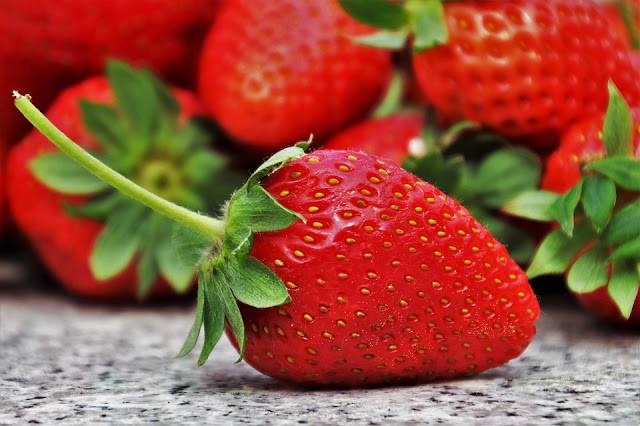
It is difficult for most of us to resist a perfectly ripe strawberry; which is one of the most popular fruits in the world. There are ten varieties of strawberries that differ in flavor, size, and texture and yet all of them have the same heart shape and leafy green cap. To fete the strawberry, that has a long history in Native Culture, the Institute for American Indian Studies is hosting the Strawberry Moon Festival on June 16 from 11 a.m. to 4 p.m., a delicious celebration not to be missed! This year the Strawberry Moon will be 100% illuminated on Monday, June 17, 2019.

To celebrate the Strawberry Moon, the Institute for American Indian Studies has organized games, food, and stories that honor the importance of this season to Native American culture. Strawberries have been used for centuries as medicine, in cuisine, and ceremonially by Native Americans. Strawberries generally represent life and good health.  


At the Strawberry Moon Festival, visitors of all ages will enjoy traditional Native American Music, and stories told by a traditional Native American Storyteller. These stories are life lessons that teach the importance of giving thanks to the bounty of the Earth. A highlight of this event will be samplings of complementary food such as strawberry tea and strawberry bread made from locally grown fruit. Special activities for children are planned from 12 noon to 4 p.m.  There will be live music from 1 p.m. to 3 pm.


The cost of this event is $10 for adults, $8 for seniors, $6 for children.