Monday, October 21, 2019

Medicinal Monday - Sweet Smelling Chamomile

Chamomile is a flowering herb that looks similar to a tiny daisy.  It has a gentle floral aroma that has made this herb popular as a flavorful and aromatic herb for centuries. Native Americans among many others have found medicinal uses for this delicate and attractive herb.


About Chamomile

There are two types of Chamomile, German and Roman chamomile and Native Americans use Chamaemelum nobile, commonly called Roman chamomile. Both types of chamomile belong to the Asteraceae family.  Typically growing three to six inches tall this evergreen perennial forms a spreading mat of aromatic fern-like foliage across the landscape.  The plant spreads by creeping stems that root as they grow. Tiny daisy-like flowers with white petals and bright yellow centers bloom throughout the summer and into the early fall. The delicate fern-like foliage emits a fruity scent when bruised and the flowers are often plucked and dried for medicinal uses.


Medicinal Uses

The Cherokee make tea from chamomile flowers to treat premenstrual symptoms and as a treatment to relax and soothe the patient. They also make a poultice from the flowers and leaves in the treatment of external swelling, inflammatory pain and as an application to treat a toothache or earache.  The Mahina make a tea from the flowers to treat babies suffering from colic and to soothe upset stomachs.


Did You Know

German chamomile (Matricaria recutita) is taller than Roman chamomile, it has similar flowers but it is an annual not a perennial.  The cone inside the center of the daisy in Roman chamomile is solid and in German chamomile it is hollow.

The name chamomile comes from Greek meaning "apple on the ground" in reference to the plant's apple-like aroma.

The ancient Egyptians compared the head of this flower to the sun and dedicated it to their sun god Re.

Roman chamomile is known as a medicinal plant from the middle ages where it was used beginning in the 16th century as a painkiller, diuretic, and digestive aid.

This herb is used to make a rinse for blonde hair.

About The Institute for American Indian Studies

Located on 15 acres of woodland acres the IAIS preserves and educates through archeology, research, exhibitions, and programs. We have a 16th c. Algonquian Village, Award-Winning Wigwam Escape, and a museum with temporary and permanent displays of authentic artifacts from prehistory to the present that allows visitors to foster a new understanding of the world and the history and culture of Native Americans. The Institute for American Indian Studies is located on 38 Curtis Road, Washington, CT.


Monday, October 14, 2019

Medicinal Monday... Rubber Rabbit Brush

Most of the year Rabbit Brush is a nondescript perennial native to the Great Plains and the west.  In the summer, however, this plant comes alive with a burst of appealing yellow flowers that beg for attention and get it!  Butterflies love the flowers of this plant and Native Americans found several clever ways to use this plant medicinally.


About Rabbit Brush

This plant is classified as a North American Shrub that is in the aster family.  It grows in the arid regions of western Canada, the Great Plains, and northern Mexico.  Rabbit Brush can grow up to seven feet high and wide. 


The blooms of this plant are pungent smelling, golden yellow flowers. Their the grey/green leaves have a felt-like feel and are long and narrow almost in the shape of a spatula.  The stems are rubbery and flexible.  The bright golden flowers gave rise to the Latin name "Chryso" "thamnus" meaning golden bush. The flowers bloom in August and September.


Practical, Ceremonial, and Medicinal Uses 

The Zuni people use the blossoms to make a yellow dye and they use the stems to make baskets. 


In Ceremonial Medicine, the Navajo Kayenta and the Navajo Ramah use this plant as an emetic to cause vomiting. Medicinally, the Navajo pound the leaves into a lotion used to treat headaches.  They also make a strong decoction of the roots that is taken for colds and fever and, to help with menstrual pain.  The Tewa take portions of the plant and hang them around the necks of babies to stop them from drooling.


Did You Know

The first specimens of this plant were collected by Meriwether Lewis along the Missouri River in 1805.

In 1904, this plant was considered as a source of rubber.

Today, rubber Rabbit Brush is being looked into as a source for hypoallergenic rubber for use in products designed for people that are allergic to latex.

The plants growing in Bayo Canyon, near Los Alamos, New Mexico have high concentrations of radioactive strontium-90 because their roots in a waste treatment area, mistook strontium-90 for calcium.  You need a Geiger counter to tell the difference.

This plant cannot grow in shade and can tolerate drought. 

Monday, September 30, 2019

Native American Ceremony and Dancers Celebrate the New Algonquian Village October 12, 2019


 The Institute for American Indian Studies on 38 Curtis Road in Washington has good reason to celebrate and you are invited to join the fun at the Algonquian Village Renewal Ceremony on October 12 from 3 p.m. to 5 p.m.  


This is your chance to be one of the first people to visit the new revitalized Village consisting of wigwams and a longhouse and, to be part of a special Native American Smudging Ceremony by Darlene Kascak, Schaghticoke. This fascinating ceremony will cleanse the new longhouse and chase away evil spirits in the village. The Thunderbird Dancers, the oldest Native American Dance Company in New York that have performed all over the world will be on hand to perform dances of celebration in the village. This amazing dance troupe keeps alive the traditions, songs, and dances they have learned that would otherwise be lost. For those interested in how the village was actually constructed, Kalin Griffin, IAIS Educator and, primitive technologist will be on hand to talk about the techniques used to reconstruct the village using only stone tools.


Since the 1980s the replicated 16th century outdoor Native American Village at the Institute has been a favorite of visitors, students, teachers, and staff. Walking on a winding forest path leading to the village that was constructed to resemble the way a Native American community in Connecticut would have looked centuries ago is one of the most memorable aspects of a visit to the Institute. Entering the village, visitors feel transported back in time as they explore the longhouse, a cluster of wigwams, shelters, and gardens. One of the most intriguing aspects of the village is that it is made using only trees and bark and other things found in the natural environment using traditional tools and techniques. Today’s visitors to the Institute and those that plan to visit in the future will continue to enjoy this beautiful village and learn about the fascinating culture of the Eastern Woodland Indians.


About The Institute for American Indian Studies

Located on 15 acres of woodland acres the IAIS preserves and educates through archeology, research, exhibitions, and programs. We have a 16th c. Algonquian Village, Award-Winning Wigwam Escape, and a museum with temporary and permanent displays of authentic artifacts from prehistory to the present that allows visitors to foster a new understanding of the world and the history and culture of Native Americans. The Institute for American Indian Studies is located on 38 Curtis Road, Washington, CT.


Medicinal Monday - Surprising Winged Sumac

Winged sumac is a species of the flowering plant in the cashew family that is native to the eastern United States. Native Americans found a number of uses for this plant from ceremonial to medicinal.


About Winged Sumac

Winged, shining or flame sumac is a deciduous tree that grows up to 18 feet tall and has underground runners that spread to provide a dense, shrubby cover for birds and wildlife.  This shrub can be found in New England south to Alabama and Florida. 


The trunk of this plant is short and crooked with open branching. The lustrous dark green foliage of this plant is noted for its beauty.  In the fall the leaves turn a brilliant red-orange. This plant has tiny greenish-yellow flowers in the summer that are followed by showy red clusters of berries in the fall that can tolerate the winter temperatures. This tree is easily distinguished from other sumacs by its winged leaf axis and watery sap.


Medicinal and Culinary Uses of Winged Sumac

The Cherokee eat the red berries to make them vomit!  They also use a decoction of the bark to treat burns and blisters.  The Creek make a decoction of the root to treat dysentery and the Koasati make a  bath for babies from a decoction of leaves to help them learn how to walk. The Delaware apply a poultice of roots to treat skin eruptions and sores. The Oklahoma and Delaware use the leaves and roots in a ceremonial tobacco mixture and the Ojibwa use the bark and berries in medicinal ceremonies. 


Did You Know...

Winged Sumac is sometimes planted as an ornamental because of its shiny leaves and pretty fruit.

The berries of the winged sumac provide winter food for game birds, songbirds and large and small mammals. Butterflies nectar the flowers.

Its bark is eaten by rabbits.

The leaves of this plant provide nesting material for bees, and sometimes bees actually nest in these plants that are often found in thickets.

Monday, September 23, 2019

Medicinal Monday - Glorious Goldenrod

In September Connecticut seems to be blanketed with bright yellow plants called goldenrod.  Although there are many different varieties of goldenrod found throughout the country, the most common type of goldenrod found in Connecticut is Canada goldenrod or solidago canadensis. Native Americans use this plant to treat several dermatological conditions.


About Canada Goldenrod
This herbaceous plant is in the perennial plant in the Aster family.  It has a central stem that can grow up to six feet tall.  It is native to northeastern and north-central North America.  The lance-shaped leaves have small teeth or grooves along the margin, otherwise, the leaves are smooth.  The stems have lines of white hair and the underside of leaves do not.  Several flowering stems emerge from the top of the plant in the form of a panicle with masses of tiny yellow flowers. The plant blooms in late summer and early fall and typically stays in bloom for up to three weeks. The root system is fibrous consisting of creeping rhizomes that cause this plant to grow in clusters sometimes forming dense colonies.  Canada goldenrod prefers sunny locations and grows almost everywhere from roadsides to fields and meadows, woodlands and both cultivated and vacant fields.  


Medicinal Uses
Tea was made from the flowers to treat fevers and snakebites. Crushed flowers are chewed to treat sore throats.  The Chippewa used a compound poultice of flowers to treat burns and ulcers.  They also applied a poultice of moistened pulverized roots to treat boils. 


Did You Know...

A wide variety of insects such as bees, wasps, flies, beetles, and a few butterflies and moths visit this plant for pollen or nectar.

Deer and rabbits occasionally eat the foliage and sometimes beavers and muskrats use the stems in their damns or dens.

In many parts of Japan and China, Canada goldenrod has been established as an invasive weed.

In China, Canada goldenrod has caused the extinction of 30 native plants in Shanghai.

Leaves were approved in Germany to treat diseases of the urinary tract.

Monday, September 16, 2019

Medicinal Monday - Old Man's Beard!

Chionanthus virginicus, commonly called the Fringe Tree gets its name from its' slightly fragrant spring-blooming flowers. Native to the southeastern United States, this plant is hardy in the north and can be found in Connecticut. Native Americans found several uses for this beautiful deciduous tree.


About the Fringe Tree
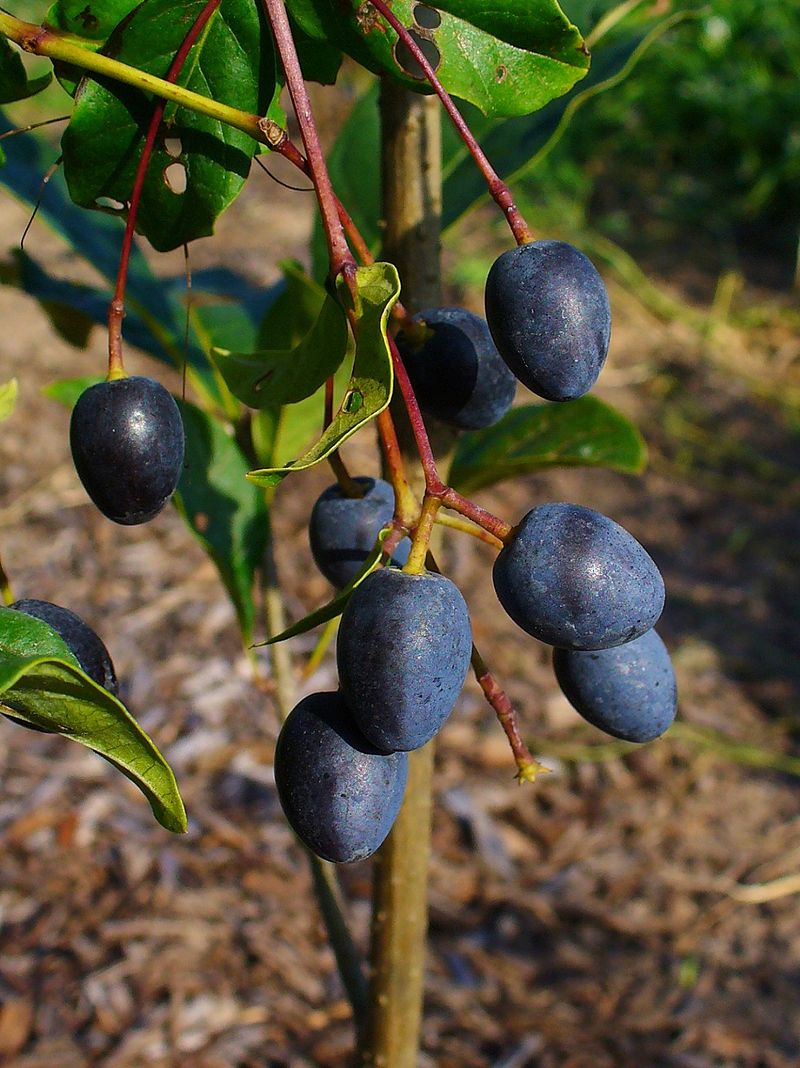
This species is a small shrub in the Oleaceae or olive family. The trees can grow up to 30 feet high and have oval, smooth, green leaves in the spring and summer that turn yellow in the fall.  The bark is scaly brown and tinged with red. 


In the spring, the plant has white flowers that feature airy, terminal drooping clusters of fringe-like petals. The fruit of this plant is a fleshy, purple ovoid drupe, similar in shape to an olive that contains a single seed.  The fruit matures in late summer or early fall.  This tree is can be found in rich moist woods and hillsides, near stream banks and in limestone glade margins and on rocky bluffs and ledges.


Medicinal Uses
The most common use of this tree among indigenous Native Americans was to dry the roots of this tree and crush the bark to treat skin inflammations, sores, and wounds. The Choctaw and the Koasati make a decoction of the bark and use it as a wash to treat infected wounds, they also apply a poultice of beaten bark to treat cuts and bruises.


Did You Know...

It is one of the last trees to bear new leaves in the spring, it appears dead until the leaves and flowers appear.

The genus name Chionanthus means snow and describes the flower.

Male flowers are showier than female flowers.

The olive-like fruit that is produced is a good source of food for birds.

Other names for this tree include Old man's beard, snowdrop tree, white fringe, and poison ash. 

Monday, September 2, 2019

Medicinal Monday Ziziphus obtusifolia

This densely branched shrub has small leaves and stiff branches ending in spines! Native Americans communities found several interesting uses for this thorny bush that range from eye medication to dermatological treatments.


About Ziziphus obtusifolia

This flowering plant is part of the buckthorn family that is native to South Central and Southwestern United States. It is commonly found in the deserts of California and through northern Mexico. It is often found growing in shrubby and scrubby desert habitats, grasslands, and prairies among other desert plants such as honey mesquite, smooth mesquite, ocotillo, and creosote.

This shrub has branches that grow into a thorny tangle and can grow up to 13 feet. The leaves are absent most of the year leaving this plant bare.  The branches are coated in whitish hair and the oval leaves are gray or green. The flowers that appear in the spring are yellow-green and the blueberry blue fruit of this plant is a mealy juicy drupe containing one seed.


Medicinal and Culinary Uses

The Pima used this plant as an analgesic for pain, they would prick the skin all over to sooth rheumatic pain.  The Apache dig up this plant and boil the roots and use this infusion as a shampoo for hair. Another use is to use a decoction of the roots to treat sore eyes.

The Papago boiled the fruit of this plant and used it as a syrup, the  Yavapai mashed the berries and added water for a drink and the Maricopa dried the berries and stored them, when they wanted to use them for food, they would soak the berries in hot water.


Did You Know...

This plant is also called lotebush, graythorn, gumdrop tree and Texas buckthorn.

The dark fruit of this plant is edible, but not especially tasty, except for wildlife.

The dense thicket of this plant provides a wonderful nesting and resting spot for birds, small mammals and lizards.