Monday, May 3, 2021

Institute for American Indian Studies Launches ReDress Exhibit through May 9 with Special May 7 Program

The ReDress Project is a national movement, started by Jamie Black, Metis that has been embraced by the Institute for American Indian Studies in Washington, Connecticut, and by the town of Washington in honor of Native American women and children that have gone missing or have been murdered in the United States and Canada. This awareness project is symbolically illustrated by the red dresses that will be fluttering in the wind for an ephemeral moment in Washington and Washington Depot on Saturday, May 1, and Sunday, May 2 and can be seen on the grounds of the Insititute through May 9, 2021.


The ReDress Project will also be displayed as a temporary exhibition on the newly developed outdoor installation, Red Trail at the Institute for American Indian Studies on 38 Curtis Road, Washington, from May 1 through May 9. Over 1oo supporters have donated red dresses of various sizes and shapes. These dresses will be displayed along our museum trails and at various locations in Washington Depot to create a visual representation of the missing spirits of these individuals. At the museum, staff and volunteers will be available to answer questions, discuss this serious topic at various age levels, and provide resources for further action.

There is no admission fee to this outdoor installation at the Institute for American Indian Studies. On May 7, at 7 p.m. the Institute is hosting a virtual discussion about the ongoing efforts to raise awareness about the missing and murdered indigenous women and children and Two Spirits, led by Education Director, Darlene Kascak, Schaghticoke, Tribal Nation.


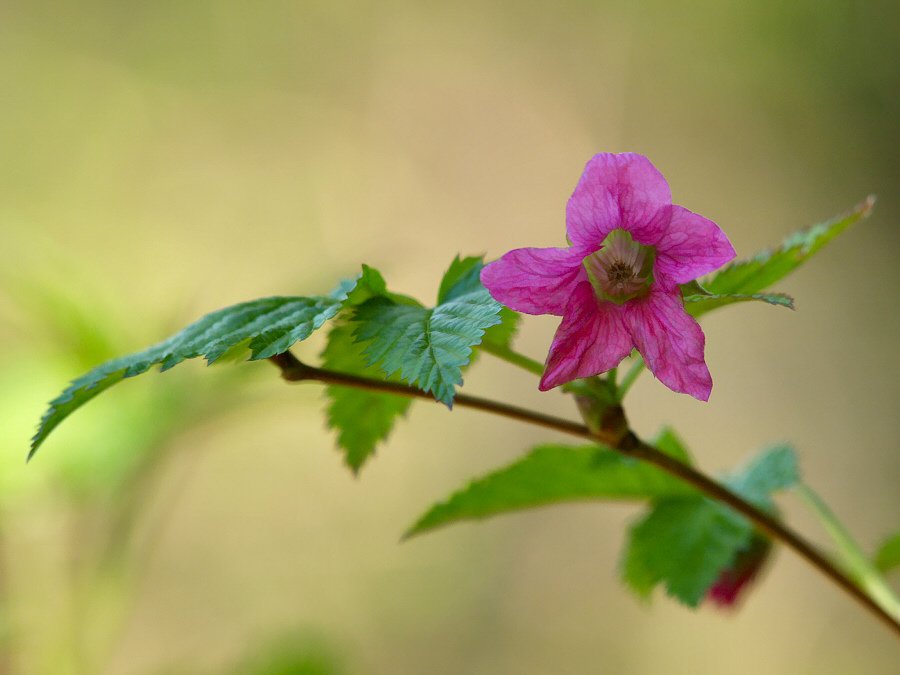
Medicinal Monday - Legendary Salmonberry

 The salmonberry is a species of brambles in the rose family that is native to the west coast of North America from west-central Alaska to California. This bright red fruit is valued for food, medicine, and its role in Native American and First Nation stories. 

About the Salmonberry

For centuries these berries have been used by native communities such as the Chehalis, Cowlitz, Lower Chinook, Makah, Quinault, Quileute, Inupiat, and Swinomish. Many Native stories are told about this berry. The Chinooks of the First Nation, for example, told a story about a coyote that was instructed to place these berries in the mouth of each salmon in order to ensure good fishing, which is how this berry got its name. Other stories compare the berries to the red eggs of a salmon.  According to anthropologists, the salmonberry plant is a symbol of "respect" among many First Nation Communities of the Pacific Northwest. It is thought that harvesting these berries represents a fulfillment of an obligation for certain clans. In a Makah legend, it is said that if a child stays out past dark, the basket woman will come and take the child and roast him or her for dinner. One night a child named Salmonberry stayed out after dark to see if the basket lady existed. The basket lady appeared and took Salmonberry to her hut to be cooked for dinner!

The salmonberry or rubus spectabilis is a perennial shrub that grows up to 13 feet tall. It has three toothed leaves with larger leaves on either side. The plant resembles the raspberry plant. The flowers have five pink petals and bloom in early summer. The berries look like a large blackberry and ripen from May through July. They thrive under red Adler and can be found in moist forests, in coastal forests, and along streams.

Medicinal, Culinary and Practical Uses

Native American people eat the young shoots of this plant in the spring. Traditionally the berries are eaten with salmon or mixed with oolichan grease from a candlewood fish (that resembles a smelt) or salmon roe. The berries are also eaten as an accompaniment to smoked salmon. 

The Kaigani Haida people make baskets with the salmonberry plant. Some communities use the leaves of the plant to wipe fish down. The Makah make tobacco pipes from salmonberry brambles.

The bark and leaves have an astringent property and are made into a tea that is taken for diarrhea or dysentery. The Quileute have a spiritual and ceremonial connection to the salmonberry coinciding with the time when the first shoots appear and, then again, when the berries appear. The Bella Coola make a decoction of the root to treat stomach troubles and the Kwakiutl apply powered bark to burns. The Makah make a poultice of bark to treat sores and toothaches, and the Quinault, use a decoction of bark to lessen labor pains.

Did You Know...

Traditionally women were responsible for the harvest of the salmonberry.

Swainson's Thrush is also called the salmonberry bird because it arrives every May when the berries begin to ripen.

Today it is widely grown as an ornamental plant because of its beautiful flowers.

Traditionally the berries were not dried because of their high moisture content.

Today, due to refrigeration and pectin, jams and jellies are made with the berries.

Monday, April 26, 2021

Medicinal Monday... Wild Comfrey - Blue and Rare

This beautiful blue flowering plant is in the borage family and is native to the Eastern United States including Southern New England. It makes its first appearance in Connecticut in the spring. It was formerly far less rare in New England and Connecticut than it is today.

About Wild Comfrey

Andersonglossum virginianum known as wild comfrey is usually found in the forest in rich soil, on steep slopes, in New England uplands, and in recently burned areas. It is dependant on humidity, low temperature, and low competition. It has adapted the unusual ability to survive fire because it helps to eliminate competition and increases the light this plant gets so it can nurture itself.  It is an unbranched perennial that stands erect and has fine hairs on its leaves and stem. The leaves are simple and not separated into leaflets. They are denser at the lower end of the stem and get smaller as they go up. When blooming this plant has a light blue flower cluster, each flower has five round petals on separate stems. The flowers at the base of the stem develop first. The roots are thick and cord-like. The fruit is dry and does not split open when ripe. Wild Comfrey is in bloom from May to June and produces fruit from July to August. The flowers produce four grayish-brown seeds that stick to animals.


Medicinal Use

The Ojibwa use this plant as an analgesic. They burn the plant on hot coals and inhale the fumes to treat headaches. Wild Comfrey has also been used to treat wounds and to flush out any internal digestive disorders and respiratory infections. The Cherokee use the root compound to treat cancer. A tea is made from the root and taken to treat itches and urinary problems and is also used as a sedative.

Did You Know...

It is sometimes called blue houndstongue. It gets this name from the appearance of its leaves that resemble a dog's tongue. 

This plant should not be taken internally in great quantities because it can cause liver damage.

It was formerly placed in the genus Cynoglossum, it was transferred to the genus Andersonglossum in 2015.

In Connecticut, Wild Comfrey is considered extremely rare.


Tuesday, April 20, 2021

Ojibwa Story of the Lady Slipper

According to an Ojibwa Legend, a village was decimated by a dreaded disease that even killed the medicine man.  To deal with this crisis the chief asked his messenger to go to a nearby village to ask for medicine. This trip was very difficult especially in the winter without moccasins.  The messenger fell ill before he was able to go.  The messenger's wife, Koo-Koo Lee decided to go fetch the medicine instead to save the life of her husband and those members of her village that had been struck with this illness. 


On her journey, Koo-Koo- Lee was impervious to the sharp ice and snow.  Upon her return, the men and women of her village found her lying in the snow with swollen feet. Koo-Koo-Lee's bundle with the medicine was clutched to her chest, she kept it safe and sound.  The villagers were so happy to see that she returned with the medicine and was relatively unharmed. They carried her into the lodge. They wrapped her battered feet in thick warm deer skins to help heal them. For the devotion she showed to her people, Koo-Koo-Lee was renamed Wah-on-nay. Her foot wrappings became little flowers of yellow on her death, called by some Wah-on-nay moccasin, and by others as the Koo-Koo- Lee moccasin.  These beautiful yellow flowers are also known as Lady Slippers.

Monday, April 19, 2021

Medicinal Monday - Delicate and Endangered - PinkLady Slippers

The Pink Lady Slipper is one of the wild orchids that are native to North America. Pink Lady Slippers are the tallest native northern orchid and many believe it is the most beautiful.  Native Americans had many interesting uses for this delicate pink, a flower that even inspired a Native American folktale.

About the Pink Lady Slippers

Pink Lady Slippers, Cypripedium acaule, bloom from May to July and are usually found in Connecticut in the wet woods, among sphagnum ferns, as well as in bogs and shady swamps.  The plant only grows from six to fifteen inches high and is usually pink in color.  It takes many years for this orchid to grow and develop into a mature plant.  Like all orchid species, they depend on symbiosis to grow and thrive. They extract a fungus found in the soil that passes on nourishment that enables this plant to grow and survive. When it is mature, the fungus extracts nutrients from the roots of the Lady Slipper.  If left undisturbed, Lady Slippers will propagate and live for many years. The plant consists of a stout, hairy, leafy stalk with elliptical, heavily ribbed, and hairy leaves. The plant bears one large flower that has six parts including a pouch called a labellum. The flowers left undisturbed will last between seven and fourteen days. 


Medicinal Uses
The Algonquin used a decoction of the roots to treat menstrual disorders, as a urinary aid,  and to treat stomach aches. The Cherokee make an infusion of the roots of the lady slipper plant for neuralgia pain as well as for spasms and fits.  An infusion of roots is used to treat colds and the flu. The Iroquois used a decoction of this flower that is taken as a blood medicine for fever and for pains all over the skin and body. A poultice of the plant was made and used to treat the bite of a mad dog. The Meskwaki make a compound of the root and use it as a love medicine.  The Micmac and the Penobscot use a tincture of the root as a sedative, and the Rappahannock mix a compound of the dried root with whiskey to treat general ailments.

Did You Know...

If you pick a Lady Slipper it will not rejuvenate.  This plant has less than a 5% transplant rate of success.

Some species of Lady Slippers are categorized as endangered in New England.

Regulations regarding picking Lady Slippers vary from state to state but in general, picking these precious flowers is discouraged and in some states illegal.

Lady Slippers became the state flower of Minnesota in 1902 where they were displayed on church alters until it became illegal to pick them in 1925.

In 2009, the Green Mountain National Forest Staff in Vermont discovered a historic population of more than 1,000 Lady Slippers not seen since 1902.


Monday, April 12, 2021

Medicinal Monday Cow Parsnip - Multi-purposed and Toxic

Cow parsnip is indigenous to North America and is enjoyed by many Native American communities. This plant is used medicinally in a wide variety of ways and eaten as a green vegetable. This is somewhat surprising because Native Americans had to transform the plant into food by reducing its toxic characteristics. As a food source, it is very important to communities living in northwestern North America.

About Cow Parsnip

This plant is a hardy perennial herb of the celery or umbel family and consists of more than sixty species that are native to North America. It can be found throughout America with the exception of the Gulf States. It ranges from Alaska to Newfoundland, south as far as Georgia, and west to California. Cow parsnips grow from a taproot or cluster of roots to a height of three feet at maturity The leaves are quite large, they have three segments divided into lobes and are coarsely toothed. The stems and lower leaves are hairy. The flowers or umbels are flat on top with clusters of small white flowers. Flowering time is from June to August depending on the elevation. The fruits are white in color and have an oval shape that is flat and winged.  Cow parsnips grow in clusters and can be found along streams, in moist meadows, thickets, and clearings. The genus name, Heracleum refers to the size of the parts of this plant, especially the leaves. The fresh foliage can cause dermatitis. If the juice and hairs of this plant are left on the outer skin it will cause blisters because it contains furanocoumarins.

Medicinal and Culinary Uses

The stalks of this plant were gathered in the spring from early April through late June before flowering occurred and eaten as a green. Once budding started, this plant was considered no longer good for eating because it got very bitter. It was the primary green of Alaskan Native Americans with some communities like the Sechelt people traveling long distances to forage for this herb. It was noted that the stalk could cause skin irritations so the stems were often split and the inner portion was pulled from the skin of the plant and eaten raw. Sometimes the stalks were heated in a fire by the Blackfoot, Gitksan, and Kootenay, before being peeled. The Kari and Ksan people chopped and cooked them in a stew. Sometimes they were stewed in sugar and served as a dessert. Another way they were prepared was in a stew served with meat. The Kaigani Haida picked and peeled the stems and packed them in grease and stored them for use in the winter. 

Cow parsnip was used to treat a wide variety of medicinal complaints. Interestingly enough even though it is a skin irritant it is used as a poultice. The Bella Coola made a compound of roots to treat hip pain and a poultice of crushed boiled or baked root was applied to boils. The Blackfoot used an infusion of young leaves to treat diarrhea. The Chippewa make a poultice of the dried flowers and boiled roots to treat boils; the root was also held on a sore tooth to treat a toothache. The Cree Woodlands make a poultice of the ground root, calamus, and yellow pond lily to treat headaches. The Haisla made a poultice of the roots, Indian hellebore, and Sitka pine pitch and applied the mixture to wounds. The Gitksan combine the cow parsnip root with red elder and juniper boughs and used it as a smudge against witchcraft victims. The Makah heated a poultice of leaves and used it to treat eye problems. The Menominee used it as a hunting medicine in the form of a smudge. The Iroquois made a compound infusion of this plant for a bath to treat headaches. The Shoshoni combined a decoction of the root with whiskey and took it like cough medicine. The Salish Coast mixed the boiled root with dogfish oil and put it on their hair to make it grow. The Winnebango smoke the plant to treat fainting.


Did You Know...

This plant is not to be confused with a parsnip.

The flavor of a young stalk tastes somewhat like celery.

A yellow dye can be obtained from the roots.

Other names for cow parsnip are Indian celery, Indian rhubarb, or pushki.

Among the Nootka and Nitinaht people, pregnant women were warned not to eat the flower bud stalks because it was thought that it would make the baby choke.

The root contains psoralen which is being researched for use in the treatment of psoriasis, leukemia, and AIDS.

Thursday, April 8, 2021

The Art of Spring Foraging in the Eastern Woodlands - April 18, 2021

Native Americans lived off the land and were able to identify edible plants and fungi from a young age. Most people today don’t invest the time to gain the experience required to know where to look for and how to identify wild food and edible plants. If you have ever been curious about foraging and what is edible in the woodlands of Connecticut, don’t miss the Spring Foraging Forum on April 18 with Griffin Kalin, a Museum Educator and Traditional Skills Expert at the Institute for American Indian Studies located at 38 Curtis Road in Washington, Connecticut. This program is recommended for the entire family and will be held in three one-hour time slots starting at 1:00 pm.

Simply put, foraging is searching for wild food and provisions. It is a wonderful way to experience the natural world and connect with the land through traditional ways that have become less commonly practiced. Wild greens and edibles in the Spring were an important source of nutrition for many Native communities and this forum offers a fascinating glimpse of how important this food source was. Spring is one of the most important times of year to forage because many types of plants and fungi are just starting to re-emerge after a long winter’s rest, which helps supplement the end of winter food supplies. 

 Foraging can be as simple as picking berries or identifying plants, tubers, and mushrooms that are good to eat. It can also involve more complicated and time-consuming processes, like grinding acorns into fine flour or tapping a maple tree for sap. This forum teaches us that foraging is an art that requires us to use all our senses and to understand and respect the habitat that plants grow in. Please note, this program is intended for educational purposes only; never eat any forage item you can’t be 100% certain about. Space per time slot is limited and pre-registration is required. To sign up for this workshop, visit https://www.eventbrite.com/e/spring-foraging-forum-with-griffin-kalin-tickets-149317226845. Please call (860) 868-0518 or email events@iaismuseum.org with any questions. 

About Institute for American Indian Studies
Located on 15 acres of woodland acres the Institute For American Indian Studies preserves and educates through archeology, research, exhibitions, and programs. They have the 16th c. Algonquian Village, Award-Winning Wigwam Escape, and a museum with temporary and permanent displays of authentic artifacts from prehistory to the present that allows visitors to foster a new understanding of the world and the history and culture of Native Americans. The Institute for American Indian Studies is located on 38 Curtis Road, Washington, CT.