Monday, May 13, 2024

Medicinal Monday...Yellow Pine

The yellow pine tree is not only an important tree for timber in the deep South, but many Native American tribes found medicinal uses for this evergreen tree that can grow up to 100 feet tall. The wood of this tree is pale yellow, finely grained, and contains less resin than other pine trees. The wood is used for a variety of purposes today including lumber, plywood, and wood pulp used in making paper.

About Yellow Pine

The Yellow Pine is found in the Southeastern United States. This evergreen tree has scaly dark bark when it is young and as it matures the bark develops flat scales that have a yellow tinge to them, which is how it got one of its most common names. The blue-green needles of this tree are slender and flexible, grow in clusters of two or three, and are up to five inches in length. The tree produces a male pale purple cone and a pale pink female cone.

Medicinal and Practical Uses

Many Native American communities used the wood of this tree for lumber. They also used the wood for carving and to make long canoes of up to forty feet. 

Medicinally the most common traditional use was to use the resin as a rub and steam bath in the treatment of sore muscles and swellings. A tea was made from the buds to induce vomiting and the pitch from the trunk was used as a laxative. The Choctaw made a cold infusion of the buds and drank the mixture to treat worms. The Nanticoke used the resin pellets as a poultice to treat sore muscles. The Rappahannock made a decoction from the upper branches of the tree and used it as a wash to treat sore muscles and swellings, they also grated the bark and made tea from it to induce vomiting. One of the more unusual uses of this tree was to feed a compound of dried bark to make dogs with distemper vomit.

photo credit  David J. Stang
Did You Know...

Other common names for this tree are old field pine, rosemary pine, and short-leaf pine,

Oleoresins are extracted to make turpentine.

This species of pine tree supports Imperial Moths.

Squirrels and other small mammals eat the seeds.

The genus name Pinus comes from Latin and is the name for pines. Echinata means spiny and refers to the prickle-tipped scales on the outsides of the cones that it produces.

If the top of the tree catches on fire, the lower trunk sends up new shoots, making it somewhat fire-resistant. 

Monday, May 6, 2024

Medicinal Monday - Crinkleroot

Crinkleroot or Cardamine diphylla is an attractive wildflower that can be found in the forests of Connecticut and in much of New England. It is a spring perennial herb in the Brassicaceae family that has been used by many indigenous people of North America for food and medicine for centuries.

photo Doug McGrady

About Crinkleroot

This perennial grows up to one foot tall and is a hermaphrodite because it has both male and female organs. It is native to much of the U.S. and Eastern Canada and typically grows in moist woodland environments, although it cannot grow in deep shade. It spreads via rhizomes and is in the mustard family. The leaves are coarsely toothed and the stem has two leaf stalks that grow opposite of each other giving the plant its moniker of "two-leaved." The flowers that appear in late April or early May are white or pink. The blooms mature into pods about five weeks after the flowers die off. Mature pods release seeds. The seeds take up to four years before they bloom. Although similar to Cut-leaved toothwort, it is different because its leaves don't grow in a whorl.

Medicinal Uses

Many Native American communities made a poultice from the roots to treat headaches, colds, and fevers and to relieve stomach problems and venereal disease. Traditionally, the Cherokee and the Malecite chewed the roots to soothe sore throats and to treat colds and fevers. The Deleware used the roots as a stomach medicine and to treat venereal disease. The Iroquois chewed raw roots for stomach gas and made a poultice of the roots to bring down swellings. They also made tea from the roots and took it as a love medicine. The Malecite made an infusion of the roots and gave it to children as a tonic. The Micmac made tea from the roots and drank it as a sedative. The Iroquois believed that the roots had magical powers and used them to counteract all types of poison. They also used smashed roots to find someone who practiced witchcraft.

Laval University
Many Native American communities used the roots of this plant for food. They would eat it raw or cooked. It was prized for its peppery taste. Specifically, the Abnaki used the roots as a condiment and put it in sauces and relishes. The Algonquin ground the root and mixed it with vinegar for use as a relish. The Cherokee boiled the leaves and stems and ate them like a vegetable, they also used the leaves in salads. The Iroquois ate salted roots raw. The Ojibwa ground the roots and mixed them with salt, sugar, and vinegar and used it as a relish.

Did You Know...

The name Cardamine is derived from the Greek word Kardamon and refers to its association with the mustard family. 

The species name, diphylla is also Greek and refers to another name for this plant, "two-leaved." 

The West Virginia butterfly uses the plant to lay its eggs.

Special bees known as Andrena arabis collect pollen from Cardamines.

In folklore, the root was used to treat toothaches.

This plant was discovered by Andre Michaux, a French botanist who went on many expeditions in the U.S. to collect plants.

Monday, April 29, 2024

Medicianl Monday - American Persimmons

 An American Persimmon is not like the Asian Persimmons that originated in China that you see in the local grocery store. Asian persimmons are much larger than American persimmons, which are about the size of a ping-pong ball. These deeply orange-colored berries were highly prized by many Native American communities as well as European settlers. The name Persimmon comes from putchamin, a rendering of the name used by the Algonquins.

photo Chris Light
About American Persimmons

Diospyros virginiana can be found from Connecticut to Florida and west to Texas and states in the Midwest. The Latin name, Diospyros means divine fruit in Greek.  This tree, which is in the ebony family and has a shrub-like appearance can grow up to sixty feet tall and its bark is grey-brown and scaley.  The leaves of the tree are oval and about six inches in length. From May through June, the tree produces creamy white tube-shaped flowers that are male and urn-shaped female flowers that change into orange-colored fruit in the fall. The flowers are pollinated by insects.  American Persimmon trees are dioecious, meaning that the tree produces either male or female flowers, both species of trees are needed for pollination. The most common way this tree spreads is by seeds that are dispersed by animals that eat their fruit.

photo Eric Toensmeier
Medicinal & Culinary Uses

One of the most common traditional uses of this tree is as an antidiarrheal and to treat gastrointestinal problems and indigestion. A tea was also made from the roots to treat dysentery.  A tea made from the seeds of the fruit was used to treat kidney stones.  It has also been used to treat sores in the mouth and throat and as a wash for piles and as a toothache remedy. Specifically, the Cherokee chewed the bark to treat heartburn and made an infusion of the bark to treat the liver. They also made a compound infusion and used this to treat toothaches. The Rappahannock made an infusion of the bark and drank it as a tea to treat thrush, sore throats, colds, and fevers. 

Many Native American communities ate the fruit and used it to make puddings, bread, jams, jellies, and beverages. Some communities fermented the fruit to make brandy. The Rappahannock rolled the fruit in cornmeal, brewed it in water, and baked it. This mixture was then mixed once again with hot water to make beer.

Eric Toensmeier
Did You Know...

It is tricky to figure out when American persimmons are ripe. Persimmons that are not ripe taste bitter because of the tannins present in the fruit. When they ripen, they are very sweet and have a flavor reminiscent of caramel. They are ripe when they are mushy, and that is usually after a frost. This fruit usually ripens around Thanksgiving.

An American Persimmon tree can live up to 100 plus years as opposed to an Asian Persimmon tree has a lifespan of 30 to 70 years.

During the Civil War, the seeds of the American Persimmon tree were boiled or roasted and ground and used as a substitute for coffee.

The American Persimmon tree is in the ebony family and the wood from the tree has been used to make golf clubs and furniture.

Persimmon seeds are thought to be able to predict the upcoming winter. If the cut kernel is spoon-shaped, the winter will have wet heavy snow, if it is fork-shaped, winter will have light powdery snow and if it is knife-shaped, the winter will be icey and cold.

Other names for the American Persimmon are common persimmon, eastern persimmon, pssumwood, possum apples and sugar plums.


Friday, April 19, 2024

Mind Over Materials: Traditional Skills Program April 28 @ Institute for American Indian Studies

 In today’s world where most things are mechanized or electronic, learning traditional skills is meaningful because it takes participants back to a time that they only read about in history books. One of the most amazing things about traditional skills is learning how to transform natural materials into something useful, by hand and sheer human ingenuity. On Sunday, April 28, at 1 p.m. and 3 p.m., the Institute for American Indian Studies is offering two 1.5-hour traditional skills programs and walks that will focus on identifying and processing useful local minerals and stones used in tool making.


Join Traditional Skills Expert and IAIS Head of Fabrication and Exhibit Production, Griffin Kalin, for a discussion and walk that will take you back in time where local minerals and stones were used to produce ceramics, stone axes, projectile points, and adzes. This realm of knowledge has ensured the survival of people in the Eastern Woodlands for millenniums, and more importantly, is part of our human heritage.


With both a discussion and a short hike, potential participants should keep in mind the second half will require adequate footwear and may not be accessible to those with limited mobility.


Space is limited and pre-registration is required for this program. To register visit www.iaismuseum.org, email events@iaismuseum.org, or call 860-868-0517. The price of participation is $10 for members of the Institute and $20 for non-members.


About The Institute for American Indian Studies

Located on 15 acres of woodland acres the Institute For American Indian Studies preserves and educates through archeology, research, exhibitions, and programs. They have a 16th c. Algonquian Village, Award-Winning Wigwam Escape, and a museum with temporary and permanent displays of authentic artifacts from prehistory to the present allows visitors to foster a new understanding of the world and the history and culture of Native Americans. The Institute for American Indian Studies is located at 38 Curtis Road, in Washington, Connecticut.


Monday, April 15, 2024

Medicinal Monday... Colorful Cardinal Flowers

These bright red flowers that grow up to six feet on spikes are hard to miss. This wildflower is native to North America and grows in marshes, along stream banks, and in damp woods. It is a special flower because few native herbaceous perennial plants have such intense color. It is easy to see why Native American communities were attracted to these showy flowers and found ways to use this plant medicinally. 

courtesy Paquet, Mélodie
About Cardinal Flowers 

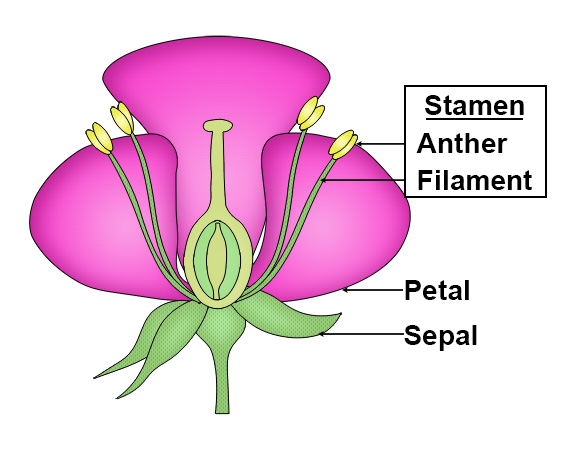
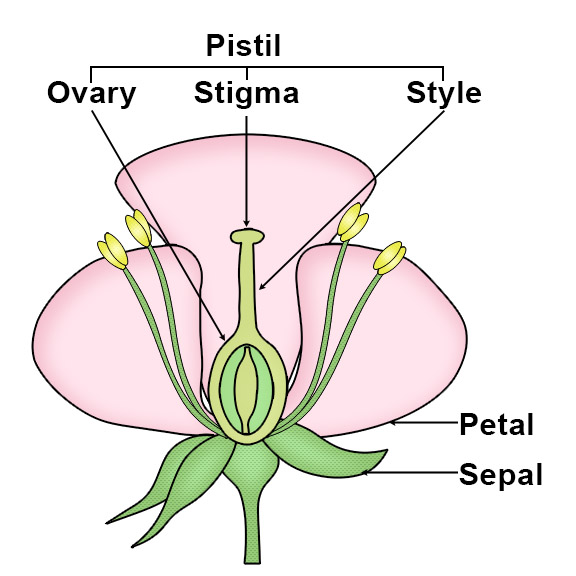
This flower is a member of the Bluebell Family and is found in much of the United States including Connecticut and eastern Canada. The National Plant Data map shows that it doesn't grow in Oregon, Washington, Idaho, Wyoming, Montana, or North and South Dakota. This plant's scientific name is Lobelia cardinalis. It grows from a rhizomatous and fibrous root system and is considered to be a wetland plant. The tubular-shaped scarlet flowers bloom on tall sturdy ridged spikes in the late summer and split into 2 lobs on the top that flare out and three lobs on the bottom of the bloom that droop down. There are five stamens which are joined together forming a red tube around the style. The tube is topped by bearded anthers to form a grayish brush. This plant is pollinated by hummingbirds and bumblebees.  The tapered dark green leaves are lance-shaped, the upper leaves are finely toothed and the lower leaves have more prominent teeth. The seed capsules hold two seeds and open to disperse them to the wind allowing the plant to self-seed. Cardinal flowers bloom until the first frost. 

courtesy Stan Shebs

Medicinal Uses

Red cardinal plants are tricky to use medicinally because their juice is milky and acrid, some people are allergic to the sap if it touches their skin. If eaten in large quantities, all parts of this plant, especially the flowers, are toxic. That said, Native American communities used this plant medicinally. One of the most common uses was to make tea to treat stomach problems and to treat colds, pain, and fever. Traditionally, the Cherokee used this plant as an analgesic and would pound the leaves into a poultice to treat a headache. They also made an infusion of the leaves to treat rheumatism, fever,  colds, and stomach trouble. The roots were pounded and taken to get rid of worms. The Delaware made an infusion from the roots to treat typhoid, while the Iroquois used an infusion or poultice of roots to treat pain, fever sores, and fevers. The Iroquois made a decoction of the plant to treat consumption and stomach troubles and as pain relief for breast trouble, and menstruation. The Zuni used parts of this plant as an ingredient in schumaakwe cakes that were eaten to treat rheumatism and extreme swelling.

courtesy Ayotte Gilles
Special Uses

The Iroquois made an infusion of the roots that was used as a wash for love medicine. The Meskwaki ground the roots of this plant and put it in food to end quarrels and prevent divorce. They also made tea from the root and drank it as a love medicine. The Pawnee made a compound of the roots and flowers and used it as a love charm.

The Iroquois made an infusion of the roots and drank it to treat the trouble caused by witchcraft.

The Iroquois made a special infusion of the flowers and stalks and washed baskets with the mixture.

Red Cardinal is one of North America's most colorful flowers
Did You Know...

The Cardinal Flower was named after Flemish botanist, Matthias de L'Obel who lived from 1538 - 1616. When he moved to England as a doctor to King James I, he changed his name to Matthew Lobel, hence the name of this plant.

Folklore indicates that this plant is named cardinalis for the red color of the robs worn by Cardinals of the Catholic Church.

The flowers attract bees, butterflies, and hummingbirds.

Cultivated in Europe since the 1600s, the English believed that if an elder woman touched the roots of this plant it would bring love into their lives.


Monday, April 8, 2024

2024 Summer Camp at the Institute for American Indian Studies Registration is Open

Registration is now open for the 2024 summer camp weekly programs for children ages 6 – 12 at the Institute for American Indian Studies at 38 Curtis Road in Washington, Connecticut. The summer camp runs for six consecutive weeks from June 24 through the week of August 5 (excluding the week of July 1), Monday through Friday, from 9 a.m. to 5 p.m. The Institute’s summer camp programs strive to get children unplugged from indoor activities through exciting hands-on programs that get them outdoors. Weekly programs encourage children to practice team building, make new friends, appreciate nature, and connect with an enriching culture that is more than 12,000 years old. To find out more and to register online visit https://www.iaismuseum.org/summer-camp. For questions call 868-0518 ext. 453 or email gbenjamin@iaismuseum.org. 


Native American history comes alive through the educationally entertaining activities curated by the professional Educational Department of the Institute. Trailblazing through the woods, investigating the natural world, mock archaeological digs, educational games, listening to traditional Native American stories, learning new crafts, and working together to complete a group project are just some of the ways children will enjoy their time at the Institute. Each week the Institute will offer a different series of exciting programs to engage and educate children. 


A connection to nature plays a critical role in a child’s development. Children that want to learn more about the natural environment and how they relate to it might want to register for, “Getting in Touch with Your Senses,” from June 24 – June 28. 

“Planting Seeds for Growth: Project Week,” from July 8-July 12 will teach children invaluable skills that have been passed down through generations of Native American communities. Foraging, building from natural materials, sewing, and weaving, are just some of the topics that will be covered. This program will help build confidence, teach basic survival skills, and enhance understanding of the great outdoors. 

Children that are budding writers, actors, actresses, puzzle solvers, and researchers will enjoy “A Play on Words: Imagination and Learning Through Storytelling,” from July 15- July 19. These programs are finely tuned to help further develop children’s communication skills by sharpening their abilities of recording, passing on, and interpret information in many ways from storytelling to theatrical expression. 

Perfect for children concerned about the environment and how to survive naturally, “Power of the Eighth Generation: Eco-Survival Skills,” from July 22 – July 26 promises to be as fun as it is informative. Campers will practice traditional survival skills like navigation, carving, lashing, and more as they explore technologies that Native Americans used for thousands of years to thrive in the Eastern Woodlands. Through these programs, campers will also learn how we impact our environment. 

For children interested in archeology, “Time Travel: Understanding the Past, Present, and Future,” from July 29 – August 2 is a must. Campers will learn how to put scientific methods into practice and learn the power of oral tradition through games, mock digs, and other activities. 


Ideal for children that have a thirst for knowledge and want a deeper understanding of our natural environment, “Ecological Explorations: Two-Eyed Seeing in the Natural World,” from August 5- August 9, is perfect for them. The programs being offered explore the concept of both traditional indigenous ecological knowledge and western scientific concepts to help children better understand the natural environment from two informative and yet different perspectives. Plant and animal identification, traditional ways Native American communities have used and respected the land and water, animal adaptations, and much more make this a unique educational experience. 

About The Institute for American Indian Studies 
Located on 15 acres of woodland acres the Institute For American Indian Studies preserves and educates through archeology, research, exhibitions, and programs. They have a 16th c. Algonquian Village, Award-Winning Wigwam Escape, and a museum with temporary and permanent displays of authentic artifacts from prehistory to the present that allows visitors to foster a new understanding of the world and the history and culture of Native Americans. The Institute for American Indian Studies is located at 38 Curtis Road, Washington, CT.

Medicinal Monday - White Sand Verbena

Abronia elliptica is a lovely fragrant flower found in the high desert of the American Southwest. It is easily identified by its large snowball-like flower head and mass of green leaves. Native American communities found several traditional medicinal uses for this beautiful desert flower. 

Photo Credit: James St. John - Bootleggers Canyon, Utah

About White Sand Verbena

Abronia elliptica is quite common and can be found in the high desert in Arizona, Colorado, New Mexico, Utah, and Wyoming. The flowers are made up of round clusters of small white trumpet-shaped flowers that are tinged with pink. White Sand Verbena spreads by rhizomes and sends up shoots of new plants from these underground roots. Stems sprawl on the sand and then grow erect. The stems are hairy and the wavey oblong shaped leaves are quite thick and have hair on their undersides. The black or brown fruit of the flower is egg-shaped and the seed inside is winged. The flowers open in the evening and close in the morning, a characteristic of the Nyctaginaceae family nicknamed four o'clock.

Photo Credit: James St. John - Bootleggers Canyon, Utah

Medicinal Uses
The Indigenous people of the Southwest use this plant traditionally as a wash for sores and insect bites and to treat stomachaches. The Navajo made a poultice of the flowers to treat boils. The Kayenta Navajo used it to treat insect bites and took it to cause sweating as a general panacea. The Ramah Navajo made a lotion for sores or a sore mouth and would bathe sweating feet in the lotion. The Zuni ate the fresh flowers to treat stomachaches and the Hopi placed the flowers on the top of a child's head to help them sleep. The Ute used the roots and flowers to treat stomach trouble. The Keres, Acoma, and Laguna ate the ground roots mixed with cornmeal to gain weight.


Did You Know...

Antoine L. Jussieu named this genus in 1789. He found this flower growing near the Green River in Sweetwater Wyoming.

The genus name Abro is Greek for delicate or pretty and refers to the flowers.

Another name for this flower is snowball and prairie snowball.

This flower is sometimes mistaken as Abronia fragrans. The difference between the two is the shape of the fruit. The shape of the fruit of the A. fragrans is arrowhead-shaped and the shape of the fruit of A. elliptic is heart-shaped.

Sweet sand verbena is grown in gardens to attract butterflies.